
The car, a capitalist dream come true
Credits
Writer and Narrator – M. Martelli
Art Director and Illustrator – Mina Mimosa
Director, Cinematographer, Video Editor, Sound Editor, and Narrator – Aron Nor
Video transcript
[General Motors Presents…][1]
just kidding…
[Your Chevrolet Dealer Presents][2]
Oops, that’s not the one…
[created by just wondering…]
Yes, now we can turn the key… [in the ignition]
The car. Do you love it or do you hate it?
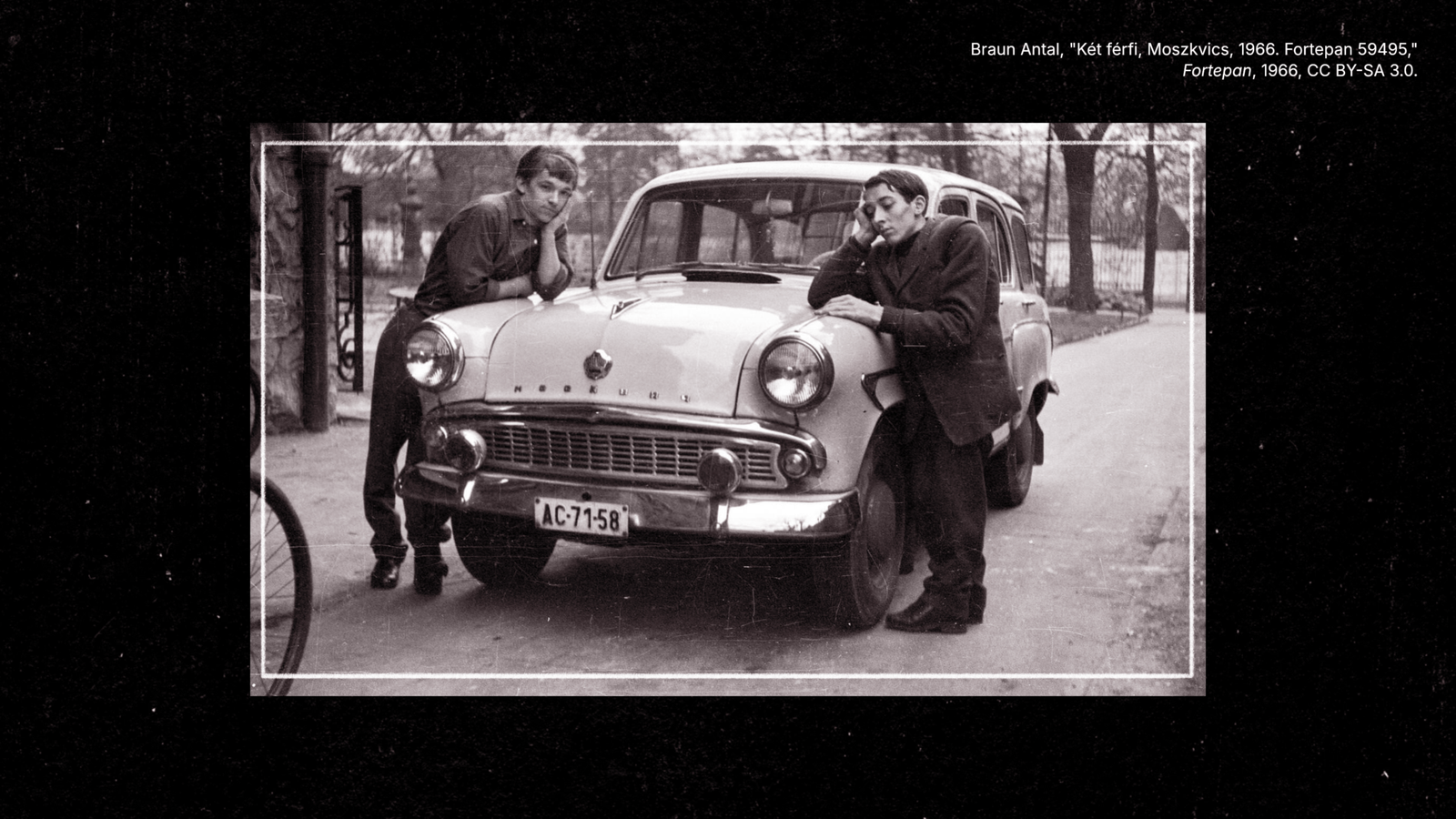
Do you dream of driving it on the winding roads, or do you loathe its honking and pollution? Do you ever wonder where it goes when it gets old? Can you afford it? Can society? Can the future?
1. The radical monopoly of automobility
[You are about to take a journey out of this world into the world of the future. Forget the world around you. Forget the people around you. You are entering Futurama.][3]
In 1939, at the New York World’s Fair exhibit, the city of the future looked like this: large highways sprawling into the urban center, separate passageways for pedestrians, and unlimited space for motorcars to speed to and from work.[4] This was designer and eugenicist Norman Bel Geddes’ vision at the General Motors pavilion, based on the prototype of the Shell Oil City of Tomorrow.[5] You’d say that was a magical act of forecasting, if only it wasn’t something else: a way to sell the world to come.[6]
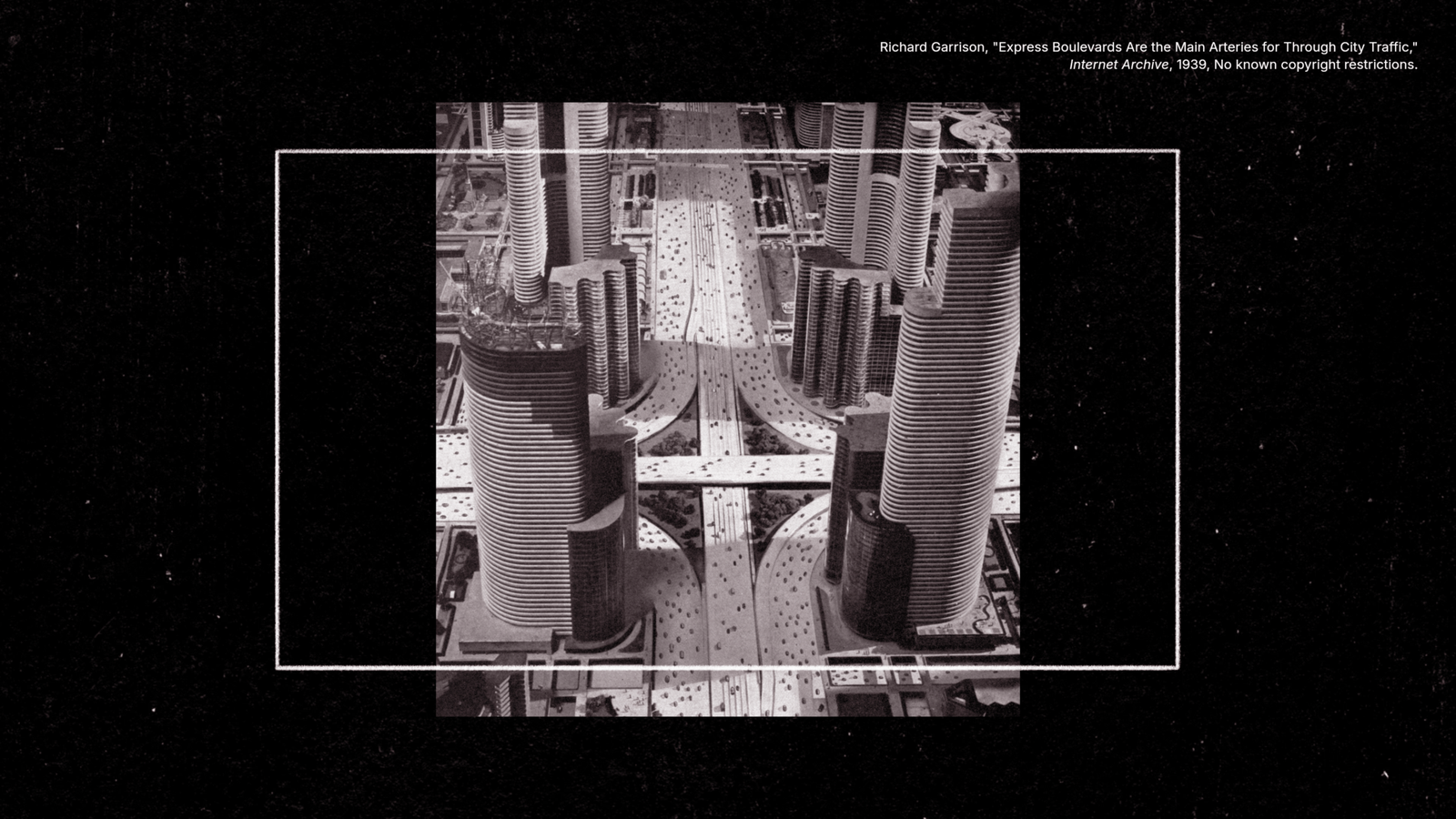
Philosopher André Gorz writes that “The oil magnates were the first to perceive the prize that could be extracted from the wide distribution of the motorcar. If people could be induced to travel in cars, they could be sold the fuel necessary to move them. For the first time in history, people would become dependent for their locomotion on a commercial source of energy.”[7] A capitalist dream comes true!
Cars had been existing for some years, but they had some problems.[8] One was the lack of separate roads through which they could accelerate as much as they pleased. As tech critic Paris Marx writes, the streets of the late 19th century were shared by people, horse-drawn carriages, bicycles and streetcars.[9] In alleys, children could play, while others could stop by vendors, as the rhythm of movement didn’t pose as many dangers. This arrangement didn’t work with the motorcar, for the motorcar’s promise was that of being faster than anyone else, and it couldn’t reach its full potential without kicking the rest of the users from the road. But, wait a minute… even now, when we do have highways over many continents, we still cannot drive at maximum speed most of the time. That’s right. Because cars, as Gorz underlines, are a luxury product. We now live and breathe traffic because the car was never truly for the masses – when everyone has one, everyone is stuck. And rest assured, not everyone can have one, that wouldn’t work, yet even so, the car has become a “vital necessity”…
[Our whole way of living has become geared towards the automobile.][10]
This wasn’t an accident, nor was it destiny. It took money, a lot of influence, and a good mix of propaganda to instill the radical monopoly of the car, but, with the power of multiple industries combined, lobbying for state support, they did it! For social critic Ivan Illich, this monopoly was called radical because cars became the dominant, sometimes only, means of satisfying the need for mobility. Unlike the monopoly of one corporation over a product, this kind of monopoly is totalizing, as it organizes society around itself.
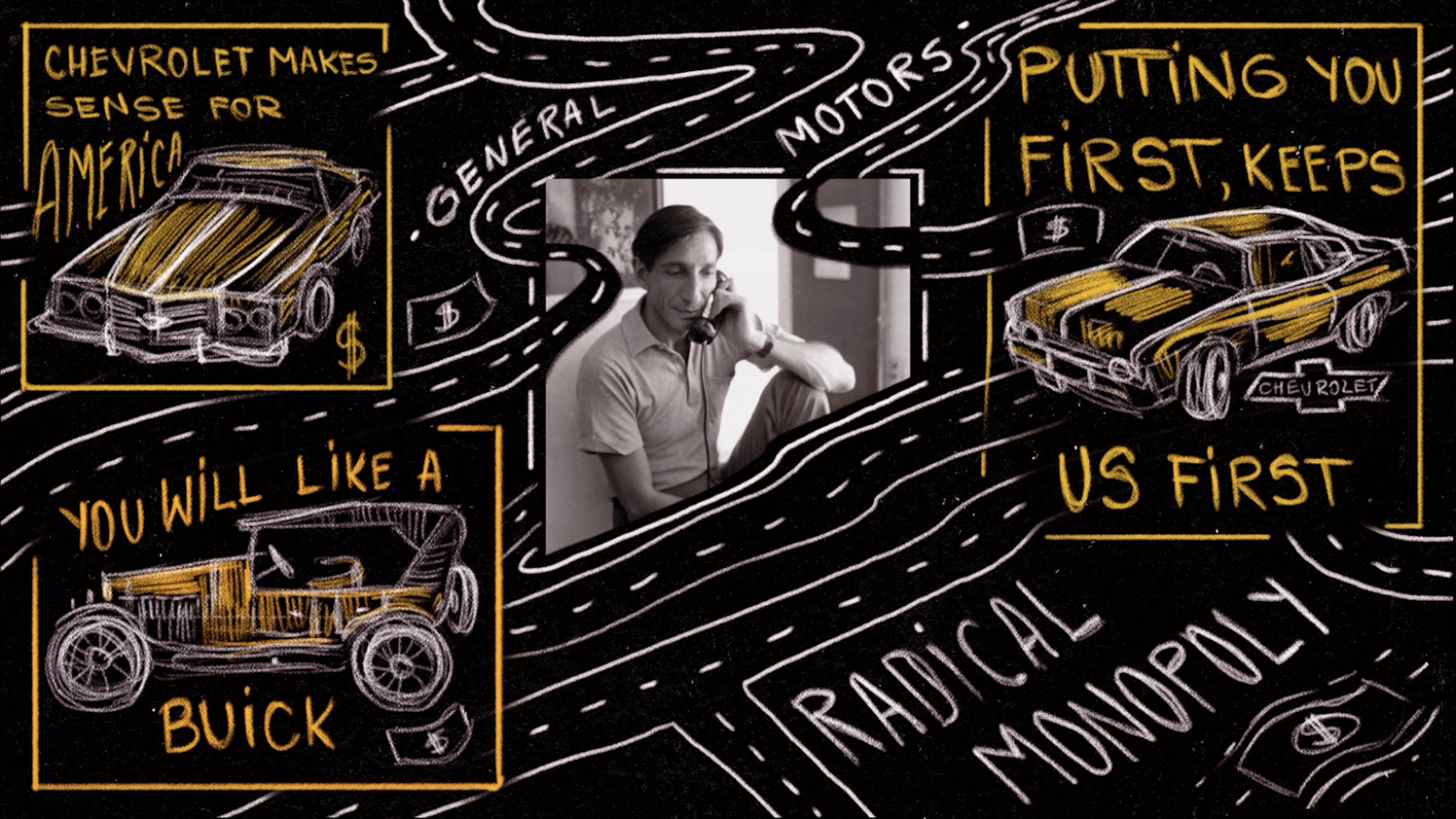
“Radical monopoly imposes compulsory consumption and thereby restricts personal autonomy. It constitutes a special kind of social control because it is enforced by means of the imposed consumption of a standard product that only large institutions can provide.”[11]
[In other automobile companies, the same vision existed. A vision of the automobile as an essential means of transportation and of jobs, the result has been the development of an industry that makes the single greatest contribution to the national economy.][12]
[Every man, woman, or child in America could go riding at the same time, because there is a car for every three persons][13]
[Now John Smith can travel safely and quickly to his job, because new roads, like magic arteries, pomp increased value, he now travels over a property whose value has increased a 100 times over.][14]
I mean, now the equivalent to John Smith kind of has to, if he can still afford to live wherever he was living, which he might, if he is middle class, cis male and white, but the traffic power structure was never so generous to people of color or to the poor, who got evicted from their neighbourhoods or were forced to live near extremely loud, highly polluting, newly built highways.[15]
Of course, people fought this! In the beginning, many didn’t want cars. They saw it was just the elite who had them. They saw the crashes, the violence they provoked, and they were horrified. Mothers protested the death of their children, who were the first victims of cars, and still are, disproportionately. More Americans died in automobile crashes in the 1920s than in World War I.[16] The level of violence we’re accustomed to now thanks to traffic was not at all usual. We should remember that for a long time, streets were for humans, as well as for the non-human animals that happened to live around us. And children had a right to be on them. You could cross them and get to know your neighbours. Yet in just a few decades, the idea of playing soccer in the middle of the road seems unsafe, if not impossible, in many places. The oil and the car industry have been gleefully shaking hands with associates.[17] And, for the first time in history, speed has become a marker of class – like Ivan Illich says, “Tell me how fast you go and I’ll tell you who you are.”[18]
2. Yesterday’s cars, today’s disasters

Fast forward to this day, global car production has reached such a magnitude that, if we put all the cars manufactured last year one in front of the other, in a line, we could reach the moon and have some to spare.[19] The system of automobility is entrenched, and we know too well of its shortcomings. Sociologist John Urry puts it this way:
“People inhabit congestion, jams, temporal uncertainties and health-threatening city environments, as a consequence of being encapsulated in a domestic, cocooned, moving capsule. Automobility […] coerces people into an intense flexibility.”[20]
I mean, it’s a strange mode of mobility in which you are completely immobile, eyes glued to the street, hands on the wheel, foot on the pedal… a mode of travel in which the unexpected becomes life-threatening, and other participants in traffic turn into annoyances. We already know that cars contribute enormously to air pollution and greenhouse gas emissions, transport as a sector covering about a sixth of global emissions.[21] We see how cars atomize and isolate us, deepen class differences, destroy neighbourhoods, impair our mental health through constant stress and noise, injure, disable and even kill us… and yet they continue to be subsidized with public money in various ways, despite the fact that the privilege of driving is unequally distributed. Children, again, come at a disadvantage, as do older people and even women.[22] The so-called freedom of the road obscures the dependence on a complex societal system: loans from banks to pay for the car, hundreds of hours of work to reach the yearly expenditures, reliance on experts and the fossil fuel industry, a need for governments to maintain infrastructure and lawfulness and so on.[23]
We tend to consider cars efficient, but Illich argues we should look at the total social time dedicated to them, not just driving time.[24] Recently, some researchers did that in Barcelona.[25] Beyond driving, they calculated the hours of labour to maintain and pay for the expenses of the vehicle, the endless searching for parking, the cleaning, the repairing, and for a year, they got to… 450 hours devoted solely to the motorcar. When divided by the average distance they drive, it doesn’t get much past 7 km per hour.[26] Pretty much anyone on a bike could surpass that. I mean, if you’re a speedy walker, with a few sprints you could do that on foot.
Yet there’s one other cumbersome thing about cars we don’t often consider…
–
[I’m a girl who happens to think that a new car is better than mink!][27]
People enjoy a new car even more than they enjoy animal slaughter! But what about the old ones? Where do they go?
Many old cars don’t just get scrapped. Why do that, when they can still run for a few months, or maybe years? No, entities like the US and the EU export them to other regions, such as Africa or Eastern Europe, making sure they are free from the clunker’s emissions with full pockets.[28]
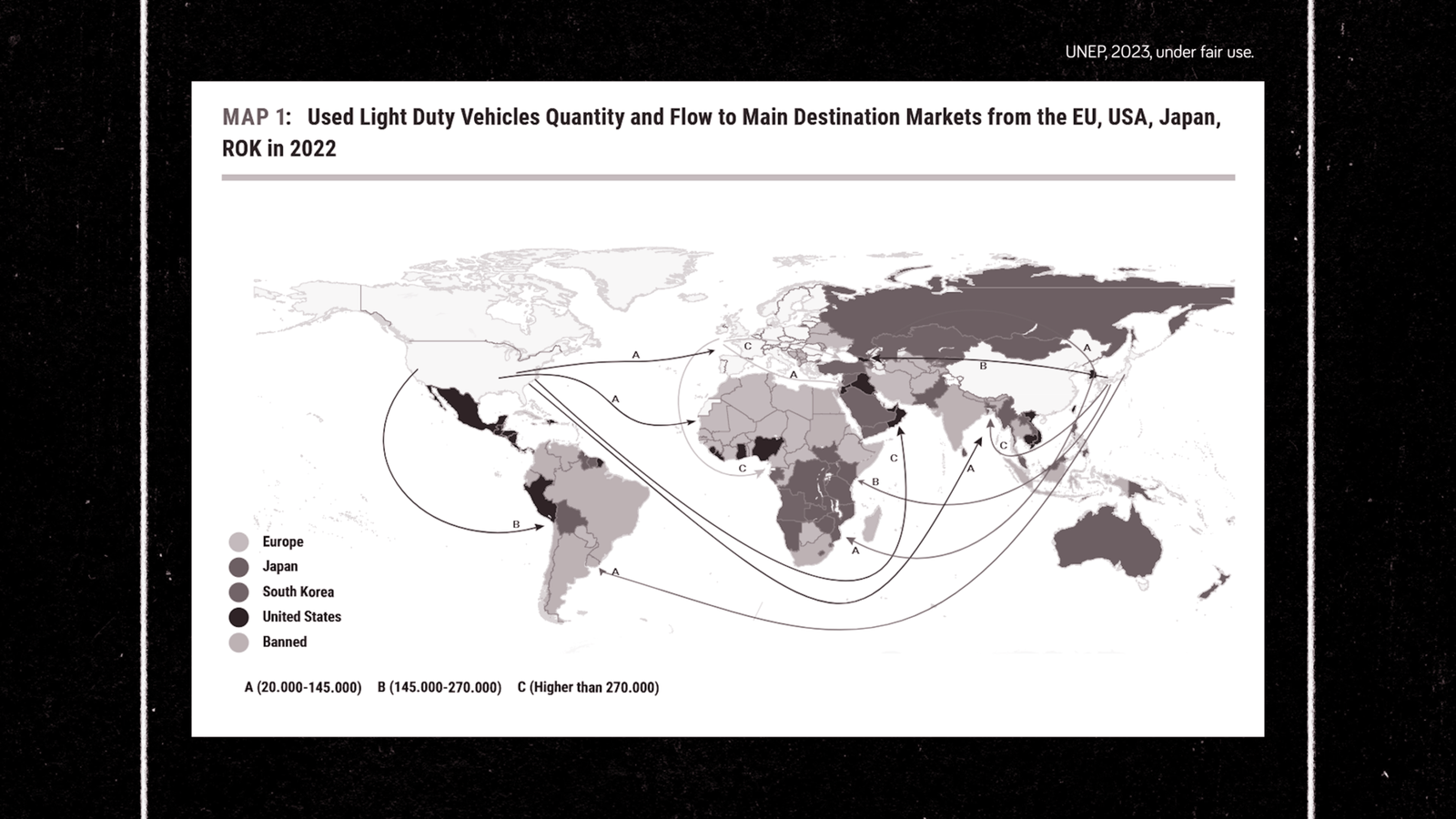
Let’s zoom in on Romania, because that’s where we’re from. Despite being in the EU, it reflects a core-semi-periphery pattern, as it provides cheap labour and a market for goods and waste to the Western core.
Romania’s car fleet is quite old, with the average age of a vehicle being about 16 years.[29] In fact, seven out of ten cars registered in 2025 were second-hand, with a majority reliance on classical fuels such as diesel and gas.[30] That’s not surprising, given the fact that a person on minimum wage would have to save money for about 30 to 50 years to be able to buy a new car.[31] That’s if they can save any at all, which is quite unlikely. If they have the average salary, maybe they could do it in… 20 or less![32] Even with national car scrappage programs such as Rabla, things don’t get much better, because the enrolled cars’ price is still too high. It’s more like a little help for the middle classes who could often afford a new-ish car anyway.[33] I mean, of course Romanians are buying the cheaper second-hand cars. And that benefits the exporting countries, because it shifts the responsibility of disposal of the soon-to-be waste.[34] It’s the shadow work of power, selling you damaged goods, along with inefficiency, pollution and danger.
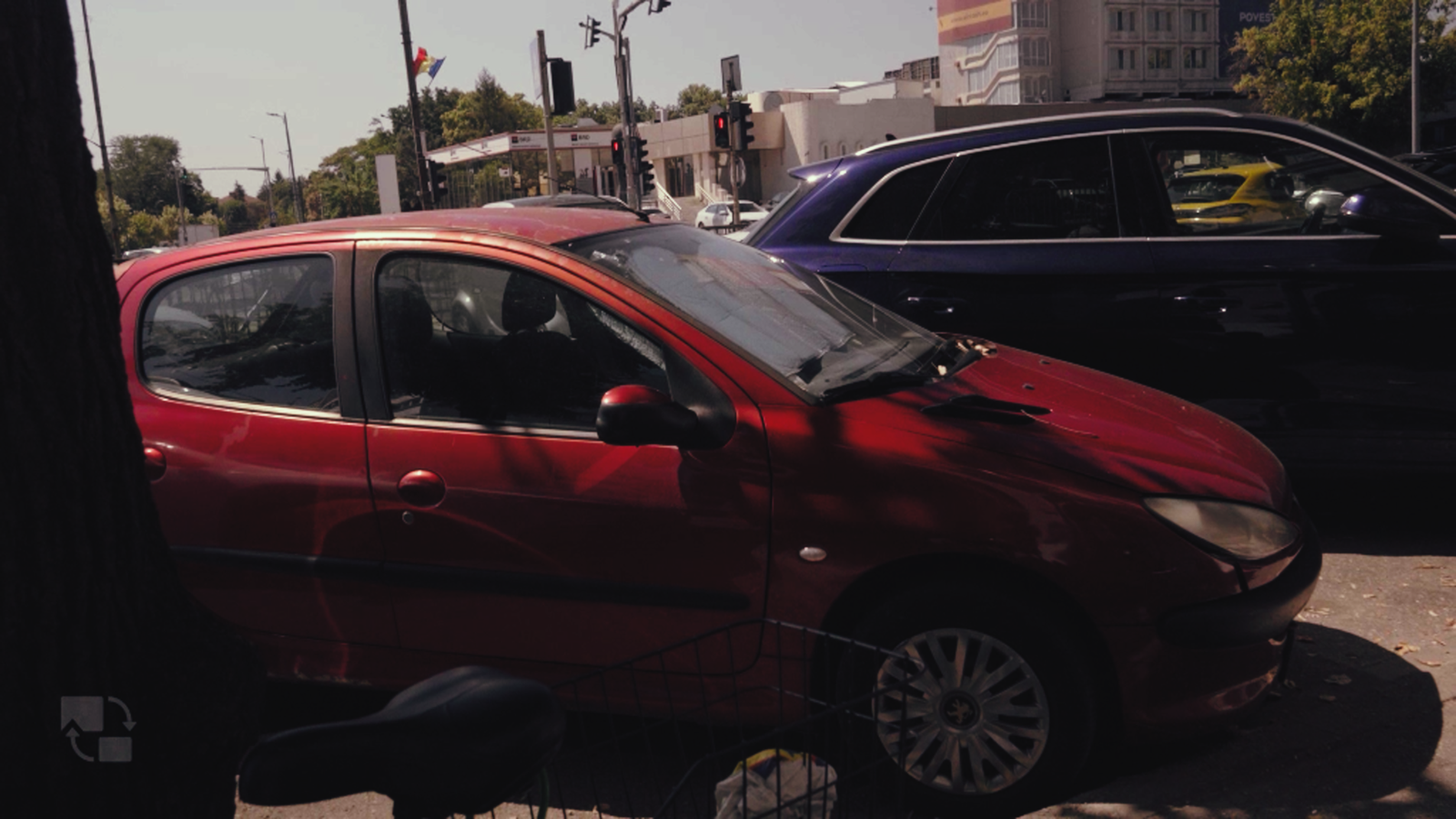
For one, used cars are more likely to leak fuel, increasing consumption and environmental damage.[35]
Second, the old vehicle fleet damages air quality, and the high numbers of diesel cars are directly related to premature deaths due to air pollution.[36]
Finally, the roadworthiness of old cars is debatable – the risk of casualties is much higher in lower-income countries, although generally fewer motor vehicles are driven.[37] Romania, specifically, has the highest fatality rate in Europe, and in urban spaces, non-car users represent 70% of total fatalities.[38] That’s also due to issues with road infrastructure, but old cars don’t help for sure.
Wait, did I mention that greenhouse gas emissions do not stop at the borders? You’d imagine they do, seeing how many countries export their cars elsewhere as if that’s a problem solved. But no… no… To not burn in the fires of hell on Earth, we’d kinda have to, you know, actually lower emissions globally.
Let’s take a step back and remember our old friends who did so much to make all this happen. Corporations such as Ford, General Motors, Toyota, Volkswagen… ah, Volkswagen! What a democratic name, right? The people’s car!
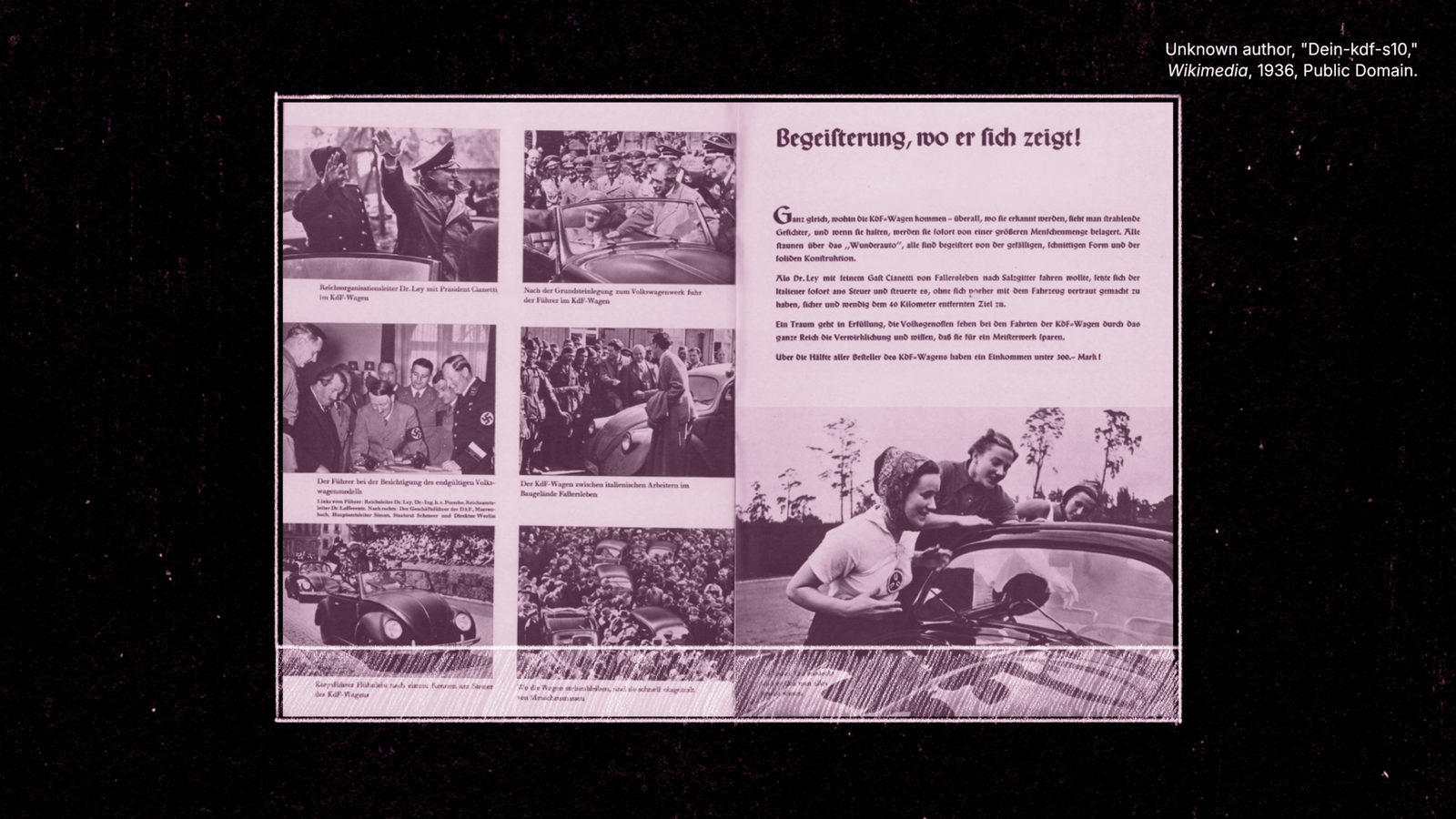
Its pretty Beetle really entered the collective imagination, so much so that you can still buy posters of its historical ads online for less than 100 dollars![39] Did you know Volkswagen operated eight forced-labour camps with Jewish inmates and prisoners of war?[40] I guess if one were to make a list of terrible things automotive corporations did, it would be quite long. A more recent one, from 2015, called Dieselgate, contributed to a growth in the already considerable number of premature deaths related to air pollution. What did Volkswagen do, exactly? They used a ‘defeat device’ that could cheat vehicle testing for regulatory purposes. Cars on the road were actually outputting over four times the applicable limit of nitrogen oxides.[41] After denying they did anything wrong, Volkswagen finally apologized, so I guess it’s fine; only 11 million cars worldwide were involved… If we put them one in front of the other, the line could wrap all the way around the Earth once, and then still get from London to Beijing.
The moral of this story? I’ll leave that up to you.
The truth is, modern society puts us at risk with things of its own making.[42] The story of automobility is also a story of class difference, of capitalism on steroids, of colonialism and environmental injustice. And, yes, while we’re at it, it’s important to supervise powerful actors, to find ways to regulate emissions, to make sure registered cars are roadworthy, to hold exporting countries responsible, and to tax, if not ban, the import of polluting goods.[43] But much more can be done to change how we live and move.
3. Mobility futures
Just look at the past.[44]
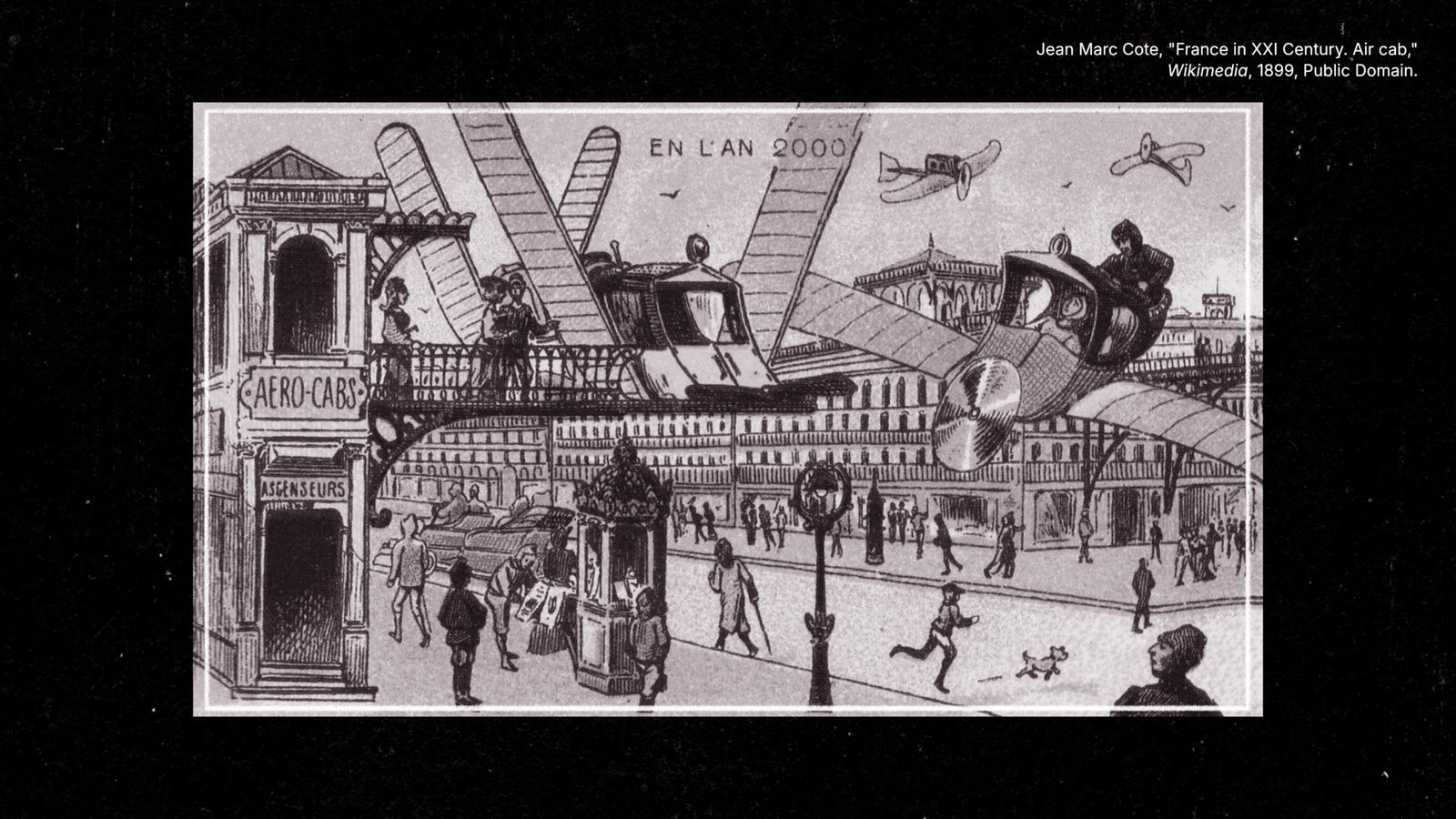
Flying cars have always filled people’s imaginations, and today, they still do. Haven’t we been promised one for decades? The tech giants of this age are even more daring.
[Elon Musk: I have a name for it, it is called the hyperloop.
Interviewer: The hyperloop?
Elon Musk: The hyperloop, yeah.
Interviewer: It’s like a Jetsons’ tunnel?][45]
[Elon Musk: Honestly, it’s a lot easier than people think.
Interviewer: The blueprints are pretty complicated.
Elon Musk: Well, blueprints are always complicated and, yes, there’s math… But it’s really not that hard.
Interviewer: It still sounds pretty complicated, Elon.][46]
[Elon Musk in 2016: I think we’re basically, less than two years away from complete autonomy.
Elon Musk in 2024: Well, I tend to be a little optimistic with timeframes. But… in 2026! Before 2027, let me put it that way!][47]
For years and years, the automotive companies have promised us that better tech and more roads will solve our mobility problems.[48] But have they?! A new hope is dumping the combustion engine and switching to electric.
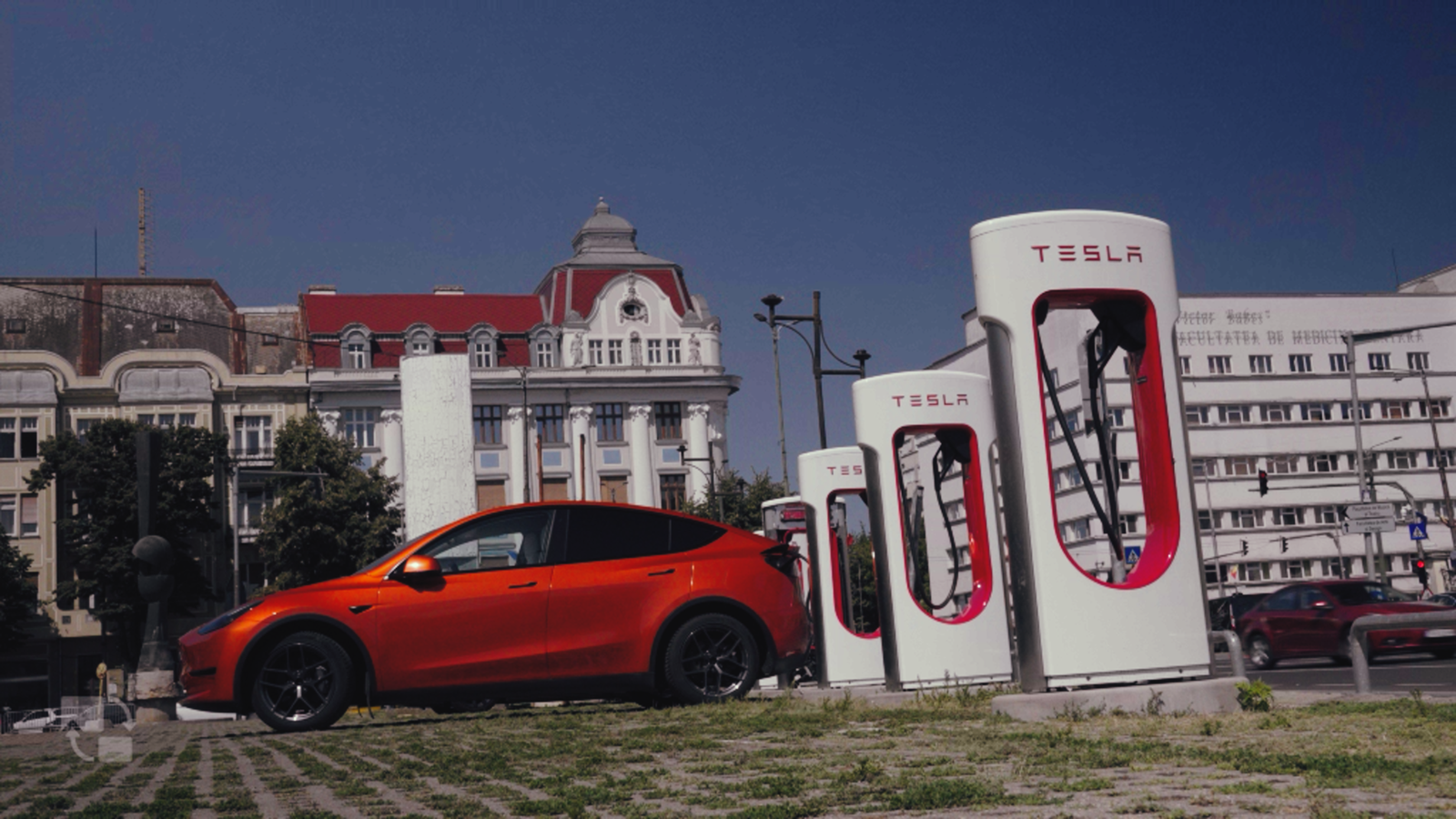
But seriously, will replacing the entire motorcar fleet with electric vehicles solve the many problems we have with automobility? It might save us some time climate-wise, but that’s not enough. It seems like this single focus on technology has made us forget that mobility is political. It should be up to us, as a society, to decide how fast and how far we want to move, or if we’d like to stay put.
Mobility needs are not set in stone, and even the ones that might be, don’t require a specific mode. Degrowth imaginaries challenge cars’ radical monopoly and their encroachment of the urban space, providing solutions through multiple options, including public transportation and active mobility, such as biking, scooting or the age-old walking.[49] The private car seemed practical because its real costs were shifted onto society at large.[50] But, with increasing congestion, pollution, alienation, and the unfolding climate chaos, is it even realistic to rely on it anymore?
You could say, yeah no, it’s not, but what would happen to all the automotive jobs? Worry not, for some smart people are already thinking about that. According to researchers at the Rosa Luxemburg Foundation, even in Germany, the fourth biggest automotive producing country in the world, a degrowth in private automobility is possible through a just transition with the creation of new jobs.[51] That can happen with reconversion, trade union involvement, state planning and an increase in the use of public transport. And if you sprinkle in the shortening of the work week, everything is even better.[52] They say that “an overall traffic mix is possible in which car traffic is even less than 10 percent.”[53]
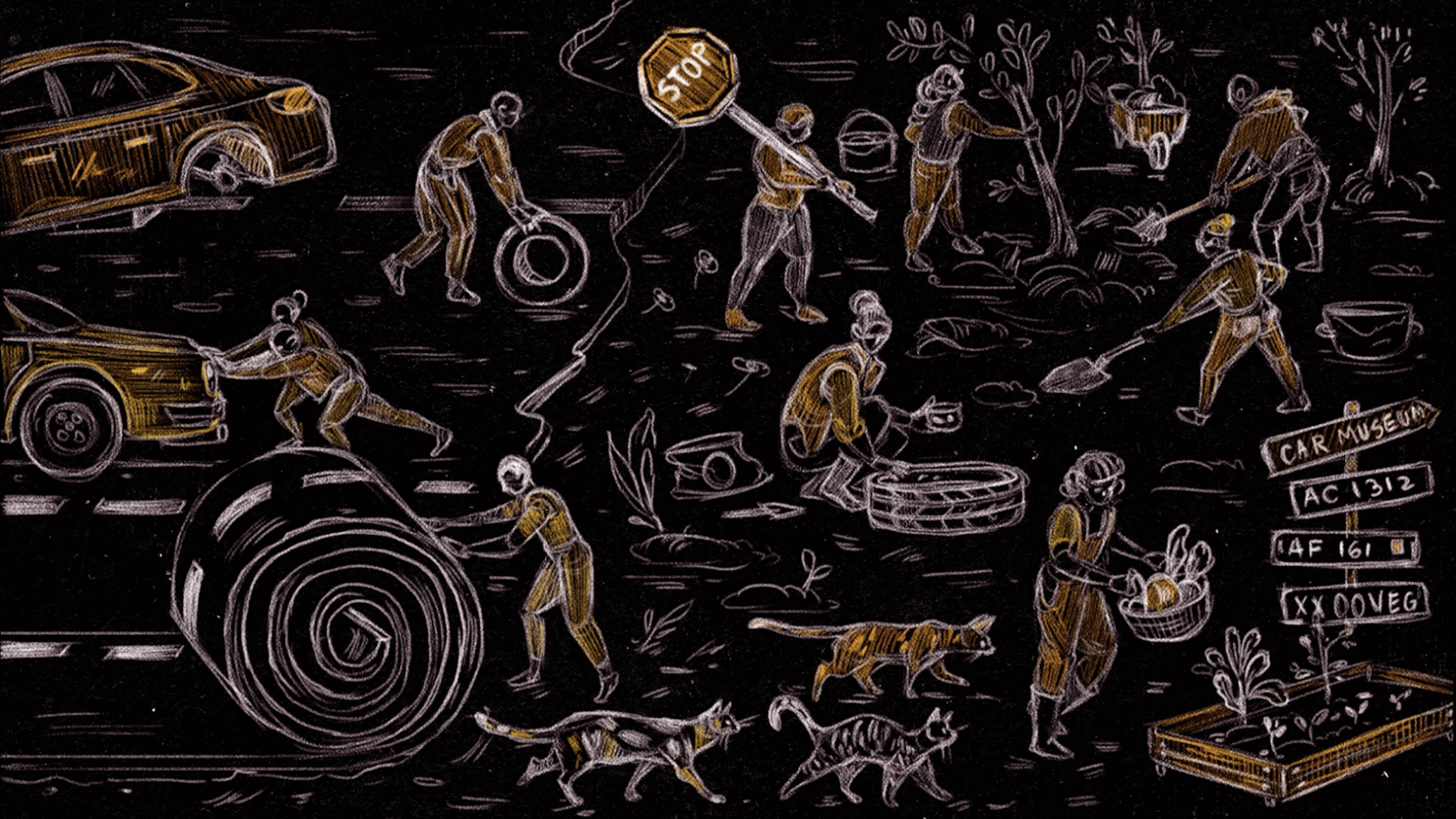
And they’re not the only ones with ideas. The Swedish network Planka, which promotes free public transport, wishes to replace the paradigm of automobility with one of accessibility.[54]
“The paradigm of accessibility suggests that all people should have access to necessary and desirable social services in the places where they live. It is an approach that subverts the idea of mobility as a value in itself.”[55]
This cannot happen in a heartbeat, but it can happen – it’s already happening! Cities like Tallinn and Belgrade are offering free public transport, while others like Amsterdam, Copenhagen and Ghent are prioritizing active mobility and restricting cars.
Ultimately, looking at accessibility forces us to contend with how mobility is related to housing, labour, education, health, and everything else in society. Social services, for example, cannot be concentrated in just one place, because everyone should be able to get to them.[56] Forcing people to travel far distances for essential goods is another creation of the automobility system that we can contest. There’s a kind of freedom we’ve forgotten, and that’s the freedom from compulsion – whether to stay, or to go.[57] A regime of mobility justice doesn’t put pressure on people to commute long hours to be able to work, whether by car, train or bus. It includes decentralization, regional production, and protection from uncontrolled investment and land grabbing.[58] And more than that – it enacts visions democratically decided by collectives.
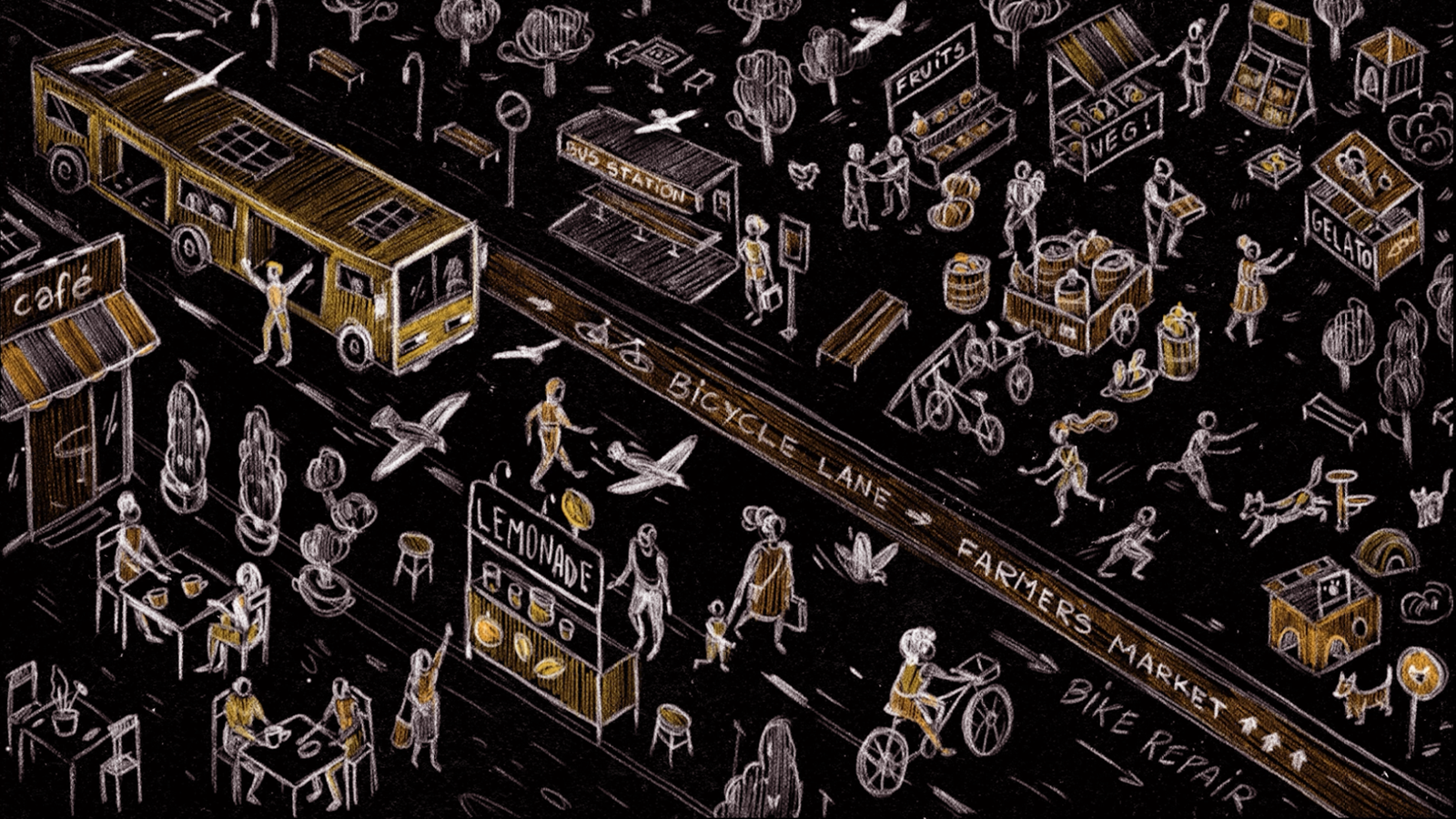
So, maybe we should put out some chairs in the parking spaces, grab a few tables, share cups of tea, coffee and lemonade, add a snack bowl and start to discuss:[59]
- Is speed the ultimate of our desires?
- Is individual private mobility in a hot metal box what we really want?
- Do pedestrians fantasize about flying vehicles?
- Do Eastern Europeans dream of second-hand cars?
- Will the future smell of gasoline, hot concrete and spent lithium batteries?
- Or is there another road, another rhythm, another politics for us?
[Remember, the bicycle rider of today is the automobile rider of tomorrow.][60]
Or, as I’d like to say, the automobile driver of today is the bicycle rider of tomorrow.
Acknowledgments
This video-essay was supported by the climate network 2Celsius, through a project led by Raul Cazan about the second hand car market in Romania, with funds from the European Climate Foundation.

This video would not have been possible without the generous support of all our patreons! We are extremely lucky and grateful to have you all on our side.
Thanks to Sergiu Novac and Emrah Irzik for checking out the script of the video essay in the production phase!
To Zmeu,
The most social and gentle cat we knew.
Cars should have never robbed you of your life.
Notes
[1] General Motors Photographic, “Your Permit to Drive,” Internet Archive, Prelinger Archives, 1951, https://archive.org/details/YourPerm1951.
[2] Handy (Jam) Organization, “How to Go Places,” Internet Archive, Prelinger Archives, 1954, https://archive.org/details/HowtoGoP1954
[3] Frigidaire, “Out of This World,” Internet Archive, Prelinger Archives, 1964, https://archive.org/details/out_of_this_world
[4] Wikipedia, “Futurama (New York World’s Fair) – Wikipedia,” Wikimedia Foundation, Inc., December 10, 2001, https://en.wikipedia.org/wiki/Futurama_(New_York_World%27s_Fair). See also the first chapter in Paris Marx, Road to Nowhere: What Silicon Valley Gets Wrong About the Future of Transportation (Verso, 2022).
[5] Wikipedia, “Norman Bel Geddes – Wikipedia,” Wikimedia Foundation, Inc., February 6, 2004, https://en.wikipedia.org/wiki/Norman_Bel_Geddes.
[6] Marx, Road to nowhere.
[7] André Gorz, “The Social Ideology of the Motorcar,” uneavenearth.org, 2018, https://unevenearth.org/2018/08/the-social-ideology-of-the-motorcar/. Translated by Patsy Vigderman in Ecology as Politics (Black Rose Books, 1980) from Le Sauvage September-October 1973.
[8] MPO Productions, “The American road,” Internet Archive, Prelinger Archives, 1953, https://archive.org/details/the-american-road-1953/the-american-road-1953-10mbps.mp4.
[9] Marx, Road to nowhere.
[10] General Motors Photographic, “Your Permit to Drive,” minute 2:50.
[11] Ivan Illich, Tools for Conviviality (Harper and Row, 1973), 78.
[12] Sound Masters, “Achievement USA” Internet Archive, Prelinger Archives, 1955, \https://archive.org/details/Achievem1955, 5:55.
[13] Handy (Jam) Organization, “Key to our horizons” Internet Archive, Prelinger Archives, 1952,
https://archive.org/details/KeytoOur1952, 1:19.
[14] MPO Productions, “Freedom of the American Road” Internet Archive, Prelinger Archives, 1955, https://archive.org/details/Freedomo1955_2, 1:36.
[15] Planka.nu, The Traffic Power Structure (PM Press, 2016); Sarah Goodyear, Doug Gordon, “EPISODE 164: The Creation of America’s Car Culture, Part 2,” 2026, in The War on Cars, podcast, MP3 audio, https://thewaroncars.org/2026/01/06/episode-164-the-creation-of-americas-car-culture-part-2/.
[16] Sarah Goodyear, Doug Gordon, “EPISODE 161: The Creation of America’s Car Culture,” 2025, in The War on Cars, podcast, MP3 audio, https://thewaroncars.org/2025/11/11/episode-161-the-creation-of-americas-car-culture/.
[18] Gorz, The Social Ideology. Ivan Illich, Energy and Equity (Harper & Row, 1974). Also attributed to Jean Roberts, according to Elias Gonzalez Gomez, Conviviality and political resistance from below: Ivan Illich’s legacy in Mexico, (Active Distribution, Rupture, 2025).
[19] Calculated based on “Worldwide Automobile Production,” Statista, https://www.statista.com/statistics/262747/worldwide-automobile-production-since-2000/. And on Statistics Netherlands, “Passenger Cars Keep Getting Longer, Wider and Heavier,” Statistics Netherlands, April 28, 2025, https://www.cbs.nl/en-gb/news/2025/18/passenger-cars-keep-getting-longer-wider-and-heavier.
[20] John Urry, “The System of Automobility,” Theory, Culture & Society 21, 4–5 (2004): 28.
[21] IPCC Sixth Assessment Report, “Chapter 10: Transport,” ipcc.ch, https://www.ipcc.ch/report/ar6/wg3/chapter/chapter-10/?utm.
[22] Planka.nu; Women come at a disadvantage for multiple reasons, from now being allowed to drive in some countries, to being more frequent walkers and users of overcrowded sidewalks, including with baby strollers.
[24] Illich, Energy and Equity.
[25] Claudio Cattaneo et al., “A Degrowth Approach to Urban Mobility Options: Just, Desirable and Practical Options,” Local Environment 27, no. 4 (January 2022): 462, doi: 10.1080/13549839.2022.2025769.
[26] Illich, Energy and Equity. Cattaneo et al, A degrowth. Where 8 km = 5 miles.
[27] MPO Productions, “Design For dreaming” Internet Archive, Prelinger Archives, 1956, https://archive.org/details/Designfo1956, min 1:26).
[28] Ariadne Baskin, “Overview of UN Environment’s Used Vehicles Work – Focus on Africa,” https://www.ccacoalition.org/sites/default/files/resources/UNEP%20presentation%20on%20Used%20Vehicles%20(June%202019).pdf.
[29] Tudor Măcicășan, Matei Trifescu, and Raul Cazan, “SOLUȚII la PROBLEMA IMPORTURILOR de MAȘINI POLUANTE la MÂNA a DOUA în ROMÂNIA,” Asociația 2CELSIUS, 2celsius.org, 2026, https://2celsius.org/wp-content/uploads/2026/05/Policy-Paper-Masini-la-mana-a-doua-1.pdf.
[30] Măcicășan, Trifescu, Cazan; agerpres.ro, “Șapte din Zece Autoturisme Înmatriculate în România în 2025 Au Fost Second-Hand (Analiză),” agerpres.ro, https://agerpres.ro/2026/01/29/sapte-din-zece-autoturisme-inmatriculate-in-romania-in-2025-au-fost-second-hand-analiza–1523201.
[31] Natalia Ciobanu & Adela Fofiu, „IMPACTUL SOCIAL AL SCHEMELOR DE REÎNNOIRE A PARCULUI NAȚIONAL AUTO: PROGRAMELE RABLA ȘI RABLA PLUS”, Asociația 2CELSIUS, 2celsius.org, 2022, https://2celsius.org/wp-content/uploads/2022/12/RABLA.ro_.pdf.
[32] Ciobanu & Fofiu.
[33] Ciobanu & Fofiu.
[34] Sophie Louise Scherger, “Clunkers for Mobility? A Critical Environmental Justice Perspective on the EU’s Exports of Used Cars to the Global South” (PhD diss., Lund University, 2021).
[35] Ignacio del Rosal, “This Car Is Gone to Haven: EU Exports of Used Cars,” Journal of Environmental Planning and Management (February 2026), doi: 10.1080/09640568.2025.2605294.
[36] Helotonio Carvalho, “Air Pollution-Related Deaths in Europe – Time for Action,” Journal of Global Health 9, no. 2 (November 2019): 02, doi: 10.7189/jogh.09.020308.
[37] Scherger.
[38] Directorate-General for Mobility and Transport, “EU Road Fatalities Drop by 3% in 2024, But Progress Remains Slow,” Mobility and Transport, March 18, 2025, https://transport.ec.europa.eu/news-events/news/eu-road-fatalities-drop-3-2024-progress-remains-slow-2025-03-18_en.
[39] “Volkswagen Ads, Vintage Magazine Advertisements | Ad Patina,” Ad Patina, https://www.adpatina.com/collections/volkswagen-vintage-ads.
[40] Holocaust Encyclopedia, “The “People’s Car” and the Nazi State”. https://encyclopedia.ushmm.org/content/en/article/volkswagen-1
[41] Guillaume P Chossière et al., “Public Health Impacts of Excess NO <Sub>x</sub> Emissions from Volkswagen Diesel Passenger Vehicles in Germany,” Environmental Research Letters 12, no. 3 (March 2017): 00, doi: 10.1088/1748-9326/aa5987.
[42] Illich, Energy and Equity. Something many others have written about, as well.
[43] Măcicășan, Trifescu, Cazan.
[44] RHP, “Futuristic Postcards: Life in the Year 2000 (as Predicted in 1900) – Rare Historical Photos,” Rare Historical Photos, December 8, 2017, https://rarehistoricalphotos.com/life-year-2000-1900/ and
https://rarehistoricalphotos.com/french-postcards-futuristic-world-year-2000/.
[45] Elon Musk Clips, “Elon Musk explains his ideas for the hyperloop,” Youtube, 2018, https://www.youtube.com/watch?v=OPDnk8tosHI.
[46] CNN, “Elon Musk: The Hyperloop is easy, my interns can do it,” Youtube, 2015, https://www.youtube.com/watch?v=bQcfi8HK1i8.
[47] MG Investing, “Elon Musk Promises Full Self-Driving ‘Next Year’,” Youtube, 2024. https://www.youtube.com/watch?v=B4rdISpXigM
[48] Marx, Road to nowhere.
[49] Cattaneo et al, 460.
[50] Cattaneo et al, 482.
[51] Rosa Luxemburg Stiftung, ”And what about my job? Just mobility and Alternative Production”, https://www.rosalux.de/fileadmin/rls_uploads/pdfs/sonst_publikationen/And_what_about_my_job_Brochure.pdf.
[52] Mario Candeias, ”Switching Lanes”, Rosa Luxemburg Stiftung, 2022.
[53] Candeias.
[57] Noel Cass and Katharina Manderscheid, “The Autonomobility System: Mobility Justice and Freedom under Sustainability,” in Mobilities, Mobility Justice and Social Justice, ed. Nancy Cook and David Butz (2019), 101.
[58] Cass and Manderscheid.
[59] See Parking Day, a global movement to reclaim urban space from cars. For more on speed and alienation, see our video: just wondering, „Alienation – Eat while you work, work while you commute”, Youtube Video, 2019, written by Emrah Irzik, https://www.youtube.com/watch?v=Mm5fIHwHjlc.
[60] Davis (Sid) Productions, “Bicycle Today, Automobile Tomorrow,” Internet Archive, Prelinger Archives, 1951, https://archive.org/details/BicycleToday.
Video references, sources, and copyrights
↓ Visual references
Jam Handy Organization, “Master Hands (4K),” Internet Archive, 1936, Public Domain Mark 1.0. https://archive.org/details/masterhandscomplete4kh264
Braun Antal, “Két férfi, Moszkvics, 1966. Fortepan 59495,” Fortepan, 1966, CC BY-SA 3.0. https://www.fortepan.hu/_photo/download/fortepan_59495.jpg

Kiskos Vajk, “Hungary Fortepan 6977,” Fortepan, 1975, CC BY-SA 3.0. http://www.fortepan.hu/_photo/download/fortepan_12827.jpg

Pixabay, “A red car driving down a curvy road,” PICRYL, 2016, Public Domain (CC0 1.0). https://picryl.com/media/car-red-road-transportation-traffic-267d1c
U.S. National Archives, “Environmental Images (Water Treatment Plant, Vegetables, Sculptures, Air Pollution, Oil Tanks, Aerial Photos of Cities, Water Pollution, Waterways, Dumps, Trash) – 9/22/2003,” PICRYL, 2007, No known copyright restrictions. https://picryl.com/media/environmental-images-water-treatment-plant-vegetables-sculptures-air-pollution-1b721e
Documerica, “Auto Dump,” U.S. National Archives, 1972, No known copyright restrictions. https://picryl.com/media/auto-dump-2383f8
Uvaterv, “97095,” Fortepan, 1965, CC BY-SA 3.0. https://fortepan.hu/en/photos/?id=97095
Uvaterv, “98848,” Fortepan, 1975, CC BY-SA 3.0. https://fortepan.hu/en/photos/?id=98848
Jakab Antal, “202025,” Fortepan, 1965, CC BY-SA 3.0. https://fortepan.hu/en/photos/?id=202025
Vészi Ágnes, “136910,” Fortepan, 1983, CC BY-SA 3.0. https://fortepan.hu/en/photos/?id=136910
Albert Robida, “A night at the opera in the year 2000,” Library of Congress, 1882, Public Domain. https://picryl.com/media/a-night-at-the-opera-in-the-year-2000-cartoon-by-albert-robida-ca-1882-b81d2b
Richard Garrison, “Well-Spaced Towers Rise Amid Light and Air in Tomorrow’s City,” Internet Archive, 1939, No known copyright restrictions. https://archive.org/details/magicmotorways00geddrich/page/52/mode/2up
General Motors, “Pedestrians and Motorcars Will Continue on Their Way Without Interference,” Internet Archive, 1939, No known copyright restrictions.https://archive.org/details/magicmotorways00geddrich/page/52/mode/2up
Richard Garrison, “Air, Light, Space—and Safety for Pedestrians and Motorists in Tomorrow’s City,” Internet Archive, 1939, No known copyright restrictions.https://archive.org/details/magicmotorways00geddrich/page/52/mode/2up
Richard Garrison, “Express Boulevards Are the Main Arteries for Through City Traffic,” Internet Archive, 1939, No known copyright restrictions. https://archive.org/details/magicmotorways00geddrich/page/52/mode/2up
Richard Garrison, “Parking and Unloading Will Be Removed from the Street to Within the Building Area,” Internet Archive, 1939, No known copyright restrictions. https://archive.org/details/magicmotorways00geddrich/page/52/mode/2up
Richard Garrison, “Open Spaces in Cities Will Provide Healthier Living,” Internet Archive, 1939, No known copyright restrictions. https://archive.org/details/magicmotorways00geddrich/page/52/mode/2up
Richard Garrison, “A Typical Express Boulevard Intersection and Feeders,” Internet Archive, 1939, No known copyright restrictions. https://archive.org/details/magicmotorways00geddrich/page/52/mode/2up
Richard Garrison, “Street Intersection—City of Tomorrow—World’s Fair 1939,” Internet Archive, 1939, No known copyright restrictions. https://archive.org/details/magicmotorways00geddrich/page/52/mode/2up
Richard Garrison, “Control Bridge: Future Motorway Style,” Internet Archive, 1939, No known copyright restrictions. https://archive.org/details/magicmotorways00geddrich/page/52/mode/2up
Richard Garrison, “The Crossing Point of Two Future Motorways,” Internet Archive, 1939, No known copyright restrictions. https://archive.org/details/magicmotorways00geddrich/page/52/mode/2up
Richard Garrison, “Convenient Emergency Stations Are Located Along the Motorway,” Internet Archive, 1939, No known copyright restrictions. https://archive.org/details/magicmotorways00geddrich/page/52/mode/2up
Frigidaire, “Out of This World,” Internet Archive, 1964, Public Domain. https://archive.org/details/out_of_this_world
MPO Productions, “The American Road,” Internet Archive, 1953, Public Domain. https://archive.org/details/the-american-road-1953/the-american-road-1953-10mbps.mp4
Sound Masters, “Achievement USA,” Internet Archive, 1955, Public Domain. https://archive.org/details/Achievem1955
Handy (Jam) Organization, “Key to Our Horizons,” Internet Archive, 1952, Public Domain. https://archive.org/details/KeytoOur1952
MPO Productions, Inc., “Freedom of the American Road (Part II),” Internet Archive, 1955, Public Domain. https://archive.org/details/Freedomo1955_2
Jimmie Briggs and Melissa Stanton, “Decades of Highway Construction and Community Destruction,” AARP, 2023, under fair use. https://www.aarp.org/livable-communities/getting-around/info-2023/before-the-highway-introduction.html
MPO Productions, “Design for Dreaming,” Internet Archive, 1956, Public Domain. https://archive.org/details/Designfo1956
Public Domain, “Betty Boop (Castle Cartoons VHS compilation, 1988),” Internet Archive, 1988, Public Domain. https://archive.org/details/betty-boop-castle-cartoons-1988
Unigon, “Felix the Cat in ‘The Cat And The Kit’ [circa 1927],” Internet Archive, 2018, Public Domain. https://archive.org/details/FelixTheCatAndTheKitcirca1927
Eric Porter Studios, “Eric Porter’s Color Classics,” Internet Archive, 1952, Public Domain Mark 1.0. https://archive.org/details/e-1-rabbit-stew/E2+-+Bimbo’s+Auto.mp4
Csaba László örökösei, “288027,” Fortepan, 1962, CC BY-SA 3.0. https://fortepan.hu/en/photos/?q=Volkswagen%20Beetle
Szűcs Attila, “263177,” Fortepan, 1962, CC BY-SA 3.0. https://fortepan.hu/en/photos/?q=Volkswagen%20Beetle
Unknown author, “Dein-kdf-s10,” Wikimedia, 1936, Public Domain. https://commons.wikimedia.org/wiki/File:Dein-kdf-s10.jpg

Unknown author, “DB2020AL00382,” Volkswagen Newsroom, under fair use. https://www.volkswagen-newsroom.com/en/images/detail/75-years-ago-us-troops-liberate-volkswagen-plant-and-city-on-mittellandkanal-33019?utm_source=chatgpt.com
Unknown author, “DB2020AL00384,” Volkswagen Newsroom, under fair use. https://www.volkswagen-newsroom.com/en/images/detail/75-years-ago-us-troops-liberate-volkswagen-plant-and-city-on-mittellandkanal-33021?utm_source=chatgpt.com
Jean Marc Cote, “France in XXI Century. Rolling house,” Wikimedia, 1899, Public Domain. https://commons.wikimedia.org/wiki/File:France_in_XXI_Century._Rolling_house.jpg

Villemard, “France in XXI Century. Opera avenue,” Wikimedia, 1910, Public Domain. https://commons.wikimedia.org/wiki/File:France_in_XXI_Century._Opera_avenue.jpg

JVillemard, “France in XXI Century. Flying police,” Wikimedia, 1910, Public Domain. https://commons.wikimedia.org/wiki/File:France_in_XXI_Century._Flying_police.jpg

Jean Marc Cote, “France in XXI Century. Air cab,” Wikimedia, 1899, Public Domain. https://commons.wikimedia.org/wiki/File:France_in_XXI_Century._Air_cab.jpg

Villemard, “France in XXI Century. Air cup,” Wikimedia, 1910, Public Domain. https://commons.wikimedia.org/wiki/File:France_in_XXI_Century._Air_cup.jpg

UNEP, 2023, under fair use. https://sustmob.org/PCFV/LightDutyVehicles_Report_June2024.pdf
Uber, “Uber AIR: The Future of Airborne Travel | Uber Elevate | Uber,” Youtube, 2019, under fair use. https://www.youtube.com/watch?v=mUEj6EnBzks&t=3s
Platinum Arabia, “Virgin Hyperloop Passenger Experience,” Youtube, 2021, under fair use. https://www.youtube.com/watch?v=hJ04CbEgJZ8
CNN, “Elon Musk: The Hyperloop is easy, my interns can do it,” Youtube, 2015, under fair use. https://www.youtube.com/watch?v=bQcfi8HK1i8
Elon Musk Clips, “Elon Musk explains his ideas for the hyperloop,” Youtube, 2018, under fair use. https://www.youtube.com/watch?v=OPDnk8tosHI
Tesla, “Cybercab | The Future is Autonomous,” Youtube, 2024, under fair use. https://www.youtube.com/watch?v=Qfj4urMF8CU
MG Investing, “Elon Musk Promises Full Self-Driving ‘Next Year’,” Youtube, 2024, under fair use. https://www.youtube.com/watch?v=B4rdISpXigM
Davis (Sid) Productions, “Bicycle Today – Automobile Tomorrow,” Internet Archive, 1969, Public Domain. https://archive.org/details/BicycleToday
General Motors Photographic, “Your Permit to Drive,” Internet Archive, 1951, Public Domain. https://archive.org/details/YourPerm1951
Handy (Jam) Organization, “How to Go Places,” Internet Archive, 1954, Public Domain. https://archive.org/details/HowtoGoP1954
↓ Audio references
Jam Handy Organization, “Master Hands (4K),” Internet Archive, 1936, Public Domain Mark 1.0. https://archive.org/details/masterhandscomplete4kh264
Jan Paderewski, “The Music of Ignacy Jan Paderewski,” Internet Archive, Public Domain. https://archive.org/details/TheMusicOfIgnacyJanPaderewski/Ignacy-Jan-Paderewski-Sonata3-chast_muzofon.com.mp3
Russell Garcia, “Fantastica LP (1958),” Internet Archive, 1958, Public Domain. https://archive.org/details/fantastica-cover/Garcia%2C+Russell+(1958)+-+Fantastica%2C+side+A+(archive).flac
Igor Stravinsky, “Firebird Suite,” Internet Archive, 1945, CC0 1.0 Universal. https://archive.org/details/StravinskyFirebirdSuite/05_firebirdInfernalDance.mp3
Warner Brothers, “Sinkin’ In The Bathtub,” Internet Archive, 1930, Public Domain Mark 1.0. https://archive.org/details/sinkin-in-the-bathtub-190611-ltgc.webm.-480p.vp-9
Unigon, “Felix the Cat in ‘The Cat And The Kit’ [circa 1927],” Internet Archive, 2018, Public Domain. https://archive.org/details/FelixTheCatAndTheKitcirca1927
Anything else that is not listed above is either recorded footage and materials we specifically made for this video or stock footage we acquired.